Birdingonthe.NetRecent Postings from
> Home > Mail |
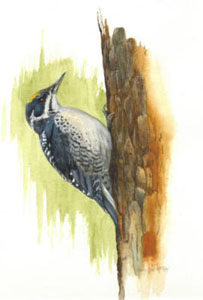
Three-toed Woodpecker,©Barry Kent Mackay |
|
11 Dec LOSH 2 [Ed alexander ] 11 Dec [Fwd: My LOSH card I sent earlier] [Ed alexander ] 10 Dec Fwd: Ole Miss E-mail Unavailable December 14-16 [] 08 Dec Water usage [Kenneth Myron Bonnell ] 10 Dec RE: Loggerhead shrike ["Vicki" ] 9 Dec Re: Bird population estimates for Mississippi [] 9 Dec Loggerhead shrike [harleyiii ] 9 Dec No Subject ["JoRee Pease" ] 09 Dec Emailing: Loggerhead Shrike2 [Ed alexander ] 9 Dec Re: Bird population estimates for Mississippi ["Judy Howle" ] 09 Dec Bird Bonaza2 [Ed alexander ] 9 Dec Re: Bird population estimates for Mississippi ["knights" ] 8 Dec Tupelo Water Treatment Plant ["Wayne R. Patterson" ] 08 Dec Hummingbirds in hand [Ed alexander ] 8 Dec Immature yellow-bellied Sapsucker ["Becky Ryder" ] 5 Dec We pay you to play. ["Carlton Schneider" ] 05 Dec Reposting Sightings Report, Tunica Co. (unsigned) [] 05 Dec Reposting Damp fine day! [] 05 Dec Vicksburg and Tensas River CBC's [] 4 Dec Golden Eagle is a Bald Eagle ["Mark Goodman" ] 4 Dec Arkabutla CBC [Van Harris ] 03 Dec Golden Eagle at Noxubee [] 03 Dec Here and gone [Kenneth Myron Bonnell ] 3 Dec Christmas Bird Counts (Vicksburg MS & Tensas River LA) [Daniel J Twedt ] 03 Dec Golden Eagle at Noxubee [] 03 Dec BirdLibrary [Ed alexander ] 3 Dec JACKSON, MS CBC (BARNETT RESERVOIR AREA) ["Mary Stevens" ] 3 Dec South MS - Winter Hummers [] 3 Dec Christmas Bird Counts (Vicksburg MS & Tensas River LA) [Daniel J Twedt ] 2 Dec Red Breasted Nuthatch ["Wayne R. Patterson" ] 2 Dec Photos of night owl - plus. [] 2 Dec Photos of night owl - plus. [] 2 Dec AR-TN-MS / Bird Bonanza / with Feruginous Hawk [] 2 Dec AR-TN-MS / Bird Bonanza / with Feruginous Hawk [] 1 Dec Rough Legged Hawk ["Wayne R. Patterson" ] 1 Dec Rough-legged Hawk-4, Ferruginous Hawk-1, Thayers Gull-2 ["knights" ] 1 Dec NYTimes.com: Endangered Species [] 30 Nov Volunteers needed to help catch Henslow's Sparrows [] 30 Nov Fall bird records due [Terry Schiefer ] 30 Nov testing - please delete [] 30 Nov Award [Ed alexander ] 30 Nov RFI Jackson County CBC [J Pat Valentik ] 29 Nov Re: Bird population estimates for Mississippi ["Nick Winstead" ] 28 Nov Bird population estimates for Mississippi ["Nick Winstead" ] 28 Nov lteiuqnu ["firas brandt" ] 28 Nov bird breeding project ["Mark Goodman" ] 27 Nov Emailing: Cackling Goose [Ed alexander ] 27 Nov resolution ["Truman Rivers" ] 26 Nov Re: Need CBC information ["Mary Stevens" ] 26 Nov Cackling Goose at A & D Sod Farm ["knights" ] 26 Nov Re: Re: Winter hummer in Vicksburg [] 26 Nov Need CBC information [J Pat Valentik ] INFO 11 Dec <a href="#"> LOSH 2</a> [Ed alexander ] <br> Subject: LOSH 2 From: Ed alexander <ebby AT suddenlink.net> Date: Tue, 11 Dec 2007 11:28: December 11, 2007 Friends------ After my email of 11:56; 10 Dec. to all of you, I have received emails back from Bill McGehee (Natchez); Harley Metcalfe (G'ville); Judy Howe (Columbus); and Vicki Williams (Goodman) in which they have sent notes of small, but steady, sightings of the Loggerhead Shrike. As a results of these emails, I am sending a return "Foward" to you in which I added the MISSBIRD to the list. A sincere movement has taken place in the Delta by the "Nature Conservancy", and other groups, to purchase parts of environmental areas for protection. It has been very successful. The Delta is a unique, beautiful country, and we seem to be starting to care for it properly. In my opinion, the population of our wildlife is stabilizing and is certainly worth protecting. Ed Alex----- GreenvilleINFO 11 Dec <a href="#"> [Fwd: My LOSH card I sent earlier]</a> [Ed alexander ] <br> Subject: [Fwd: My LOSH card I sent earlier] From: Ed alexander <ebby AT suddenlink.net> Date: Tue, 11 Dec 2007 11:04: -------- Original Message -------- Subject: My LOSH card I sent earlier Date: Mon, 10 Dec 2007 11:56: From: Ed alexanderINFO 10 Dec <a href="#"> Fwd: Ole Miss E-mail Unavailable December 14-16</a> [] <br> Subject: Fwd: Ole Miss E-mail Unavailable December 14-16 From: ulswan AT olemiss.edu Date: Mon, 10 Dec 2007 14:49: Missbirders, Please note that the listserv will be unavailable from Friday morning until Monday morning. Please do not send messages during those days. Thanks, Martha Forwarded message: Beginning at 7:00 AM on Friday, December 14, the university�s e-mail system will be completely unavailable as it is migrated to a new server and the current WebMail application is upgraded. E-mail and WebMail service will be restored by 8:00 AM on Monday, December 17. Please note that during this time period, no one will be able to send or receive messages using an olemiss.edu account. There will be no access to WebMail, and you will not be able to access your olemiss.edu account using an e-mail client such as Outlook, Eudora, or Thunderbird. Valid e-mails to your olemiss.edu account should remain on the sending server long enough to be re-sent once the Ole Miss system is available. In other words, you should receive any e-mail sent to you during this period. Your folders and messages on the current WebMail system will be migrated. Please sign into the new WebMail once it becomes available and verify your information is correct. Any current forwarding or vacation settings will not be migrated. You will need to reset these once service is restored. If you use Eudora, you will need to update your SSL settings as directed when you first connect to your olemiss.edu account. This e-mail upgrade will allow the increase of default quotas from the current 5 MB to 300 MB for faculty/staff and 100 MB for students. The updated WebMail will offer several new features, including the ability to forward e-mail and set a vacation message. For more information, contact the IT Helpdesk at or helpdesk AT olemiss.edu. Martha Swan 1665 Toccopola Jct. Rd. Thaxton, MS 38871INFO 08 Dec <a href="#"> Water usage</a> [Kenneth Myron Bonnell ] <br> Subject: Water usage From: Kenneth Myron Bonnell <thecob AT tecinfo.net> Date: Sat, 08 Dec 2007 15:31: For the past five days, I've had a great number of Robins and Cedar Waxwings at my two bird baths. Twixt bathing and drinking, they're using almost eight (8) gallons of water per day. Anyone else experiencing the same? Ken Bonnell Greenville -- BEGIN-ANTISPAM-VOTING-LINKS ------------------------------------------------------ Teach CanIt if this mail (ID 6458332) is spam: Spam: http://spamdb.tecinfo.net/b.php?i=6458332&m=7791061ac88f&c=s Not spam: http://spamdb.tecinfo.net/b.php?i=6458332&m=7791061ac88f&c=n Forget vote: http://spamdb.tecinfo.net/b.php?i=6458332&m=7791061ac88f&c=f ------------------------------------------------------ END-ANTISPAM-VOTING-LINKSINFO 10 Dec <a href="#"> RE: Loggerhead shrike</a> ["Vicki" ] <br> Subject: RE: Loggerhead shrike From: "Vicki" <vlw AT netdoor.com> Date: Mon, 10 Dec 2007 06:47: I, too, have seen a Loggerhead shrike on a street sign at the corner of County Line Road and I-55 on the edge of Jackson, MS. I'm always surprised at the traffic birds will tolerate. Vicki Williams Attala Co. Goodman, MS -----Original Message----- From: owner-missbird AT willow.olemiss.edu [mailto:owner-missbird AT willow.olemiss.edu] On Behalf Of harleyiii Sent: Sunday, December 09, 2007 12:23 PM To: missbird AT willow.olemiss.edu Subject: [MISSBIRD] Loggerhead shrike I saw one yesterday while at the stoplight at the busy intersection of highway 1 and 82 in Greenville. There seems to be good numbers of them here in the Delta. Also an immature bald eagle was reported to me yesterday, by a friend, in the city limits of Greenville on Cypress Lane. Harley MetcalfeINFO 9 Dec <a href="#"> Re: Bird population estimates for Mississippi</a> [] <br> Subject: Re: Bird population estimates for Mississippi From: MSDWMc AT aol.com Date: Sun, 9 Dec 2007 21:14:16 EST I took a look at the Natchez CBC records for the last 20 counts and see no indication that shrike populations are down in our area. Most CBC shrike counts were about 25 - 30 for our circle. For the most recent 107th CBC we had only 8 but we had fewer participants and fewer participant hours than usual, plus high wind and horizontal rain for much of the day so all species numbers were down. For the 105th CBC we tallied 38, the second highest in twenty years. Bill McGehee **************************************Check out AOL's list of 2007's hottest products. (http://money.aol.com/special/hot-products-2007?NCID=aoltop00030000000001)INFO 9 Dec <a href="#"> Loggerhead shrike</a> [harleyiii ] <br> Subject: Loggerhead shrike From: harleyiii <harleyiii AT earthlink.net> Date: Sun, 9 Dec 2007 12:23: (GMT-06:00) I saw one yesterday while at the stoplight at the busy intersection of highway 1 and 82 in Greenville. There seems to be good numbers of them here in the Delta. Also an immature bald eagle was reported to me yesterday, by a friend, in the city limits of Greenville on Cypress Lane. Harley MetcalfeINFO 9 Dec <a href="#"> No Subject</a> ["JoRee Pease" ] <br> Subject: No Subject From: "JoRee Pease" <wpjp AT earthlink.net> Date: Sun, 9 Dec 2007 12:13: While birding in Hancock County Dec. 4 we had six loggerhear shrikes - the most I have seen in one day in a very long time. JoRee PeaseINFO 09 Dec <a href="#"> Emailing: Loggerhead Shrike2</a> [Ed alexander ] <br> Subject: Emailing: Loggerhead Shrike2 From: Ed alexander <ebby AT suddenlink.net> Date: Sun, 09 Dec 2007 11:46: The message is ready to be sent with the following file or link attachments: Loggerhead Shrike2 Note: To protect against computer viruses, e-mail programs may prevent sending or receiving certain types of file attachments. Check your e-mail security settings to determine how attachments are handled.INFO 9 Dec <a href="#"> Re: Bird population estimates for Mississippi</a> ["Judy Howle" ] <br> Subject: Re: Bird population estimates for Mississippi From: "Judy Howle" <howle AT cableone.net> Date: Sun, 9 Dec 2007 11:20: I saw a loggerhead shrike at Prairie Waters Tuesday. Judy Howle Southern Exposures http://southern-exposures.net Digital Photography Class http://digitalphotographyclass.net ----- Original Message ----- From: knights To: Nick Winstead Cc: MISSBIRD Sent: Sunday, December 09, 2007 10:45 AM Subject: Re: [MISSBIRD] Bird population estimates for Mississippi Nick and Missbirders: I looked up the population in MS for one species that I have seen plummet drastically over the past 5 years...the LOGGERHEAD SHRIKE. The PIF breeding season estimation is 80,000 birds!!!!!!! for the whole state of MS. That is almost 1000 birds per county!!!!!! Of course that figure is outrageous!!! Some counties have more and some have less. I can hardly find 10 birds in my county of Lafayette.....which I couldn't do 25 years ago. The delta region may have the largest number of breeding pairs in MS. I propose that all birders in MS make special efforts this coming Spring and Summer to pay special attention to the shrike numbers in their areas/counties and report them to Nick, Missbird, and the MS Ornithological Society. This is only 1 species that I checked on in the PIF database mainly because I have wondered about the shrike's demise. Gene Knight Oxford, MSINFO 09 Dec <a href="#"> Bird Bonaza2</a> [Ed alexander ] <br> Subject: Bird Bonaza2 From: Ed alexander <ebby AT suddenlink.net> Date: Sun, 09 Dec 2007 11:18: December 09, 2007 Re: Jeff Wilson-----& Mike Todd and the knights. As usual, I enjoyed your delightful (and most informative) writing of a wonderful subject !!! I will look foward to placing this into my BirdLibrary. NOW-----I would love to have some sort of map that shows me where all these events occur Any hope of my receiving this ?? Thanks alot !! Ed Alex------ GreenvilleINFO 9 Dec <a href="#"> Re: Bird population estimates for Mississippi</a> ["knights" ] <br> Subject: Re: Bird population estimates for Mississippi From: "knights" <gsknight AT dixie-net.com> Date: Sun, 9 Dec 2007 10:45: Nick and Missbirders: I looked up the population in MS for one species that I have seen plummet drastically over the past 5 years...the LOGGERHEAD SHRIKE. The PIF breeding season estimation is 80,000 birds!!!!!!! for the whole state of MS. That is almost 1000 birds per county!!!!!! Of course that figure is outrageous!!! Some counties have more and some have less. I can hardly find 10 birds in my county of Lafayette.....which I couldn't do 25 years ago. The delta region may have the largest number of breeding pairs in MS. I propose that all birders in MS make special efforts this coming Spring and Summer to pay special attention to the shrike numbers in their areas/counties and report them to Nick, Missbird, and the MS Ornithological Society. This is only 1 species that I checked on in the PIF database mainly because I have wondered about the shrike's demise. Gene Knight Oxford, MS ----- Original Message ----- From: Nick Winstead To: MISSBIRD Sent: Wednesday, November 28, 2007 3:06 PM Subject: [MISSBIRD] Bird population estimates for Mississippi Partners in Flight has created a webpage (http://rmbo.org/pif_db/laped/) where you can view breeding bird population estimates for landbirds at multiple scales. The scales include continental, bird conservation region (BCR), each state's portion of each BCR, or statewide. So for Mississippi, you can see what the population estimates are statewide, for the Delta (BCR 26) or for the rest of the state (BCR 27). These data are based on the results of the Breeding Bird Survey, which I've posted about on MISSBIRD before. The Breeding Bird Survey is our best way of estimating populations and deciding which species are in trouble. There are a lot of assumptions in the estimations, but they're at least a good starting point. It's pretty interesting to look at some of the numbers. For example, did you know that Mississippi is estimated to have 10% of the world's population of Hooded and Prothonotary Warblers? These are, of course, estimates. So if you think you see something that isn't quite right, please let me know. We're trying to tweak the figures to reflect the most accurate information available. From just a cursory look, I know there are some things that can be updated. We know of at least 100 Bald Eagles nesting in the state instead of the 40 listed. There are no estimates for Yellow-throated Warblers in the Delta due to a lack of BBS routes with detections in the Delta. There are some very rare species, like Mississippi Sandhill Crane and Swallow-tailed Kite that don't show up well on the BBS, therefore didn't make it into the estimates. We probably have fair estimates for some of these through special projects unrelated to the BBS that we can use to help update the estimates. Most of the problems with the database are a reflection of the relatively few BBS routes we have in Mississippi and the fact that we don't always have people to run all of them every year. So if you get a chance, take a look at it and see what you think. Let me know if you have any comments or questions. Nick Nick Winstead Ornithologist Mississippi Dept. of Wildlife, Fisheries & Parks Museum of Natural Science 2148 Riverside Drive Jackson Mississippi 39202 Phone:, ext. 108 Fax: http://www.mdwfp.com/museum/INFO 8 Dec <a href="#"> Tupelo Water Treatment Plant</a> ["Wayne R. Patterson" ] <br> Subject: Tupelo Water Treatment Plant From: "Wayne R. Patterson" <wrp6 AT wildblue.net> Date: Sat, 8 Dec 2007 20:56: (MST) Missbirders, There was a single Eared Grebe on the front pond this morning. The back pond had a single White Pelican, the first I have seen in Tupelo. Wayne Patterson Shannon, MS Lee Co.INFO 08 Dec <a href="#"> Hummingbirds in hand</a> [Ed alexander ] <br> Subject: Hummingbirds in hand From: Ed alexander <ebby AT suddenlink.net> Date: Sat, 08 Dec 2007 12:26: December 08, 2007 Hi Dub------ I am unable to properly read my computer after late A.M.------BUT-----I know all about dealing with hummingbirds after catching them in my nets----(no longer in operation of open nets) Over the last many years, I have been able to take the bird out of my net, and carefully turn it over into my palm-----and hold it as long as I am motionless !!------an interesting experiance !! EbbyINFO 8 Dec <a href="#"> Immature yellow-bellied Sapsucker</a> ["Becky Ryder" ] <br> Subject: Immature yellow-bellied Sapsucker From: "Becky Ryder" <hryder29 AT comcast.net> Date: Sat, 8 Dec 2007 10:21: Just when I thought my backyard bird watching was not very interesting, this morning I saw my first ever yellow-bellied sapsucker. At first I thought it was a downy woodpecker, then I saw the long white band on the wings. Other birds that I've had the past week are brown-headed nuthatch, mounring dove, cardinal, chickadee, titmouse, blue jay, mockingbird, Carolina wren, chipping sparrow, dark-eyed junco, and towhee. Becky Ryder Hattiesburg, MS hryder29 AT comcast.netINFO 5 Dec <a href="#"> We pay you to play. </a> ["Carlton Schneider" ] <br> Subject: We pay you to play. From: "Carlton Schneider" <AngelofunnyGriffith AT metacafe.com> Date: Wed, 5 Dec 2007 15:22: (CST) Visit and start seeing the dollars coming. When YOU WIN, we win! We pay you to play. USA players too! Download and GO! http://eurocasinoal.com/INFO 05 Dec <a href="#"> Reposting Sightings Report, Tunica Co. (unsigned)</a> [] <br> Subject: Reposting Sightings Report, Tunica Co. (unsigned) From: ulswan AT olemiss.edu Date: Wed, 05 Dec 2007 08:31: Location: Tunica Cnty Catfish Farms Observation date: 12/2/07 Notes: Went down to the catfish ponds in Tunica County. Lousey weather for bird watching, Very windy, and rain squalls coming through. Strings of Cormorants overhead constantly at first stop. Lots of ducks at one time far to the east over and above but the rain and fog prevented longdistance ID. Started with the ponds at Limerick & Rt 4. GB Herons feeding on the catfish. Huge roost south of the ponds about 3/4 mile down the rd in a wetland area w/deadtimber. Impressive that many Herons together at this time of year. But then again the dinner table is always set. Moved on to Sarah Rd and then Walnut Lake Rd. Walnut Lake didn't have one bird on it. However some of the farmers have started to flood fields and one had a good number of various ducks on it. Finished off with a look at the ponds o n Gum Pond Rd. N side. The few ponds that can be seen from the rd held alot of Scaup and some Mallards and a few Canvassback. Number of species: 17 Gadwall 10 Mallard 61 Northern Shoveler 1 Northern Pintail 12 Canvasback 3 Lesser Scaup 313 Hooded Merganser 63 Ruddy Duck 33 Double-crested Cormorant 200 Great Blue Heron 119 Osprey 1 Red-tailed Hawk 2 American Kestrel 4 Killdeer 3 Eurasian Collared-Dove 48 Mourning Dove 29 Belted Kingfisher 1 Martha Swan 1665 Toccopola Jct. Rd. Thaxton, MS 38871INFO 05 Dec <a href="#"> Reposting Damp fine day!</a> [] <br> Subject: Reposting Damp fine day! From: ulswan AT olemiss.edu Date: Wed, 05 Dec 2007 08:24: DEC. 2, 2007 MS RV, Ensley Bottoms Shelby Co. TN Tunica Co, MS I met the Harboldt's from Jackson TN, down at Mud Island and the gray skies and howling wind made for unsteady conditions but we were Rewarded..........I first came across 3 Goldeneye (2m/1f) floating downstream and a few Bufflehead but no Peregrines, they may have been blow off their perches. Finally, down the river floated a Lesser Scaup, a female Red-breasted Merganser and THE SURF SCOTER!! We could not find any Black Scoter but we had a back up bird waiting. I had talked to QB Gray about looking for the Black Scoter at TVA Lake and when I pulled up, almost the first bird I came across was the sleeping Black Scoter. The wind made for difficult looks but the ID points were well seen by all. QB had been there and been enjoying the bobbing bird for some time from his truck. Next stop was for the Thayer's Gulls in Tunica Co. Again we had to stand behind the truck in order not to be blown, tumbling down the road but we had great looks at one of the Thayer's and poor looks at the other. We also had good comparative shots at both Herring and Thayer's in the air. You can see some nice photos taken by Mike on Saturday starting at: http://www.pbase.com/mctodd/image/ One of the Rough-legged Hawks was barely holding on to it's thin little branch at the top of it's favorite tree and put on quite a show as it hunted, kiting right in front of us. After much searching for western Meadowlarks, I had about a dozen birds fly across the road but they would not stand for being looked at by strangers but they will stay in that area for better looks. Had a few scattered Lapland flocks but they were hunkered in pretty tight. We met a couple of other birders from Memphis and started an evening vigil in the rain but what an abundant pay-off for our efforts. At one time we had Sandhill Cranes going to roost and calling, over 50 Harriers flying over the roost field, Snow, Ross's and Greater White-fronted Geese going over by the thousands, 2-300 Lapland Longspurs flying over giving their occasional "tew" notes and finally the first of and in great light, over 30 Short-eared Owls that called and chased Harrier Hawks and left the field for over 30 minutes, until too dark to see but they called and called. Never let the weather keep you in the house................... ONE DAMP FINE DAY!! Good Birding !!! Jeff R. Wilson / TLBA 6300 Memphis-Arlington Road Bartlett, TN 38135 http://www.pbase.com/ol_coot/ What is this feathered thing that lifts my heart to the heavens. Martha Swan 1665 Toccopola Jct. Rd. Thaxton, MS 38871INFO 05 Dec <a href="#"> Vicksburg and Tensas River CBC's</a> [] <br> Subject: Vicksburg and Tensas River CBC's From: ulswan AT olemiss.edu Date: Wed, 05 Dec 2007 08:20: Missbirders, Recently a few (not all) Internet providers rejected postings from Missbird. I'm reposting the messages I caught - they will be duplicates for some of you. Martha Dear Birders, Th Vicksburg CBC will occur on 22 December 2007 and the Tensas River CBC will occur on 5 January 2008. Please let me (or Bruce Reid - breid AT audubon.org) know if you can participate in either of these bird counts. A compilation will be at the USGS/FWS office following the Vicksburg count. If you know of others who may wish to participate, please forward this message. Thank you. Dan Twedt USGS Patuxent Wildlife Research Center 2524 South Frontage Road, Vicksburg, MS 39180 (Fax ) Martha Swan 1665 Toccopola Jct. Rd. Thaxton, MS 38871INFO 4 Dec <a href="#"> Golden Eagle is a Bald Eagle</a> ["Mark Goodman" ] <br> Subject: Golden Eagle is a Bald Eagle From: "Mark Goodman" <sps642460 AT gmail.com> Date: Tue, 4 Dec 2007 18:01: Thank you to those who examined the "golden eagle" pictures and determined there were field marks there for an immature bald eagle. As a photographer, I can't argue with getting bald eagle pictures. Mark Goodman StarkvilleINFO 4 Dec <a href="#"> Arkabutla CBC</a> [Van Harris ] <br> Subject: Arkabutla CBC From: Van Harris <shelbyforester1223 AT earthlink.net> Date: Tue, 4 Dec 2007 16:24: (GMT-06:00) The Arkabutla CBC will take place on Thursday, December 27, 2007. Contact Van Harris,. Van Harris Millington, TNINFO 03 Dec <a href="#"> Golden Eagle at Noxubee</a> [] <br> Subject: Golden Eagle at Noxubee From: ulswan AT olemiss.edu Date: Mon, 03 Dec 2007 14:36: Reposting for Mark Goodman - the attached photo made the message too large to deliver to Missbird. Please contact him directly (sps642460 AT gmail.com) if you would like to see the photo. Missbirders I took this photographs on Nov. 21 at Noxubee Refuge. The bill indicates an eagle and the lack of white in the tail feathers eliminates a bald eagle. Therefore, I have identified the bird as a golden eagle, which do appear in the winter at the refuge. Mark Goodman Starkville Martha Swan 1665 Toccopola Jct. Rd. Thaxton, MS 38871INFO 03 Dec <a href="#"> Here and gone</a> [Kenneth Myron Bonnell ] <br> Subject: Here and gone From: Kenneth Myron Bonnell <thecob AT tecinfo.net> Date: Mon, 03 Dec 2007 20:17: Like a rare Mississippi Delta snowstorm, an immature male Rufous was here a while. A trap was set, but it didn't go in and left for the rest of that day. Came back a few more times, but has not been seen for a week now. Like snow, it was nice while it lasted. Ken Bonnell Greenville -- BEGIN-ANTISPAM-VOTING-LINKS ------------------------------------------------------ Teach CanIt if this mail (ID 5681595) is spam: Spam: http://spamdb.tecinfo.net/b.php?i=5681595&m=b4a12b09dea9&c=s Not spam: http://spamdb.tecinfo.net/b.php?i=5681595&m=b4a12b09dea9&c=n Forget vote: http://spamdb.tecinfo.net/b.php?i=5681595&m=b4a12b09dea9&c=f ------------------------------------------------------ END-ANTISPAM-VOTING-LINKSINFO 3 Dec <a href="#"> Christmas Bird Counts (Vicksburg MS & Tensas River LA)</a> [Daniel J Twedt ] <br> Subject: Christmas Bird Counts (Vicksburg MS & Tensas River LA) From: Daniel J Twedt <dtwedt AT usgs.gov> Date: Mon, 3 Dec 2007 09:14: Dear Birders, Th Vicksburg CBC will occur on 22 December 2007 and the Tensas River CBC will occur on 5 January 2008. Please let me (or Bruce Reid - breid AT audubon.org) know if you can participate in either of these bird counts. A compilation will be at the USGS/FWS office following the Vicksburg count. If you know of others who may wish to participate, please forward this message. Thank you. Dan Twedt USGS Patuxent Wildlife Research Center 2524 South Frontage Road, Vicksburg, MS 39180 (Fax ) http://www.pwrc.usgs.gov/staff/profiles/documents/twedt.htmINFO 03 Dec <a href="#"> Golden Eagle at Noxubee</a> [] <br> Subject: Golden Eagle at Noxubee From: ulswan AT olemiss.edu Date: Mon, 03 Dec 2007 14:36: Reposting for Mark Goodman - the attached photo made the message too large to deliver to Missbird. Please contact him directly (sps642460 AT gmail.com) if you would like to see the photo. Missbirders I took this photographs on Nov. 21 at Noxubee Refuge. The bill indicates an eagle and the lack of white in the tail feathers eliminates a bald eagle. Therefore, I have identified the bird as a golden eagle, which do appear in the winter at the refuge. Mark Goodman Starkville Martha Swan 1665 Toccopola Jct. Rd. Thaxton, MS 38871INFO 03 Dec <a href="#"> BirdLibrary</a> [Ed alexander ] <br> Subject: BirdLibrary From: Ed alexander <ebby AT suddenlink.net> Date: Mon, 03 Dec 2007 11:44: December 03, 2007 I would be glad to enter you into my BirdLibrary, but I need yourr Name(s) and Addresses. Thanks. Ed Alex------ GreenvilleINFO 3 Dec <a href="#"> JACKSON, MS CBC (BARNETT RESERVOIR AREA)</a> ["Mary Stevens" ] <br> Subject: JACKSON, MS CBC (BARNETT RESERVOIR AREA) From: "Mary Stevens" <library AT mmns.state.ms.us> Date: Mon, 3 Dec 2007 11:21: The Jackson CBC will be Sat Dec 29. Please let me know ASAP if you will be counting. Thanks, Mary Mary P. Stevens Museum Librarian Mississippi Museum of Natural Science 2148 Riverside Drive Jackson, MS / Fax: 601/ email: library AT mmns.state.ms.usINFO 3 Dec <a href="#"> South MS - Winter Hummers </a> [] <br> Subject: South MS - Winter Hummers From: <james.bell AT shell.com> Date: Mon, 3 Dec 2007 11:02: All, The winter hummer season has started in Carriere MS, I had the pleasure of banding a AHY/Female Rufous, HY/Female Black-chinned and HY/Male Black-chinned this weekend at my home. Nothing like those orange-red, or violet colored gorget feathers to give you a hint as to what you might have... The flowers are still everywhere, which teaches perseverance in the chase. I have reported Hummingbirds from the Diamondhead area to check. Keep watching your feeders, and let us know... be glad to visit you !! James Bell HBSG Bander Carriere, MS jbellbirds AT bellsouth.net Or drop Bob Sargent a noteINFO 3 Dec <a href="#"> Christmas Bird Counts (Vicksburg MS & Tensas River LA)</a> [Daniel J Twedt ] <br> Subject: Christmas Bird Counts (Vicksburg MS & Tensas River LA) From: Daniel J Twedt <dtwedt AT usgs.gov> Date: Mon, 3 Dec 2007 09:14: Dear Birders, Th Vicksburg CBC will occur on 22 December 2007 and the Tensas River CBC will occur on 5 January 2008. Please let me (or Bruce Reid - breid AT audubon.org) know if you can participate in either of these bird counts. A compilation will be at the USGS/FWS office following the Vicksburg count. If you know of others who may wish to participate, please forward this message. Thank you. Dan Twedt USGS Patuxent Wildlife Research Center 2524 South Frontage Road, Vicksburg, MS 39180 (Fax ) http://www.pwrc.usgs.gov/staff/profiles/documents/twedt.htmINFO 2 Dec <a href="#"> Red Breasted Nuthatch</a> ["Wayne R. Patterson" ] <br> Subject: Red Breasted Nuthatch From: "Wayne R. Patterson" <wrp6 AT wildblue.net> Date: Sun, 2 Dec 2007 16:26: (MST) Ed, You can add my name to the list of folks with Red Breasted Nuthatchs at their feeder. I've seen it several times today. Also I forgot to report yesterday an almost mature Bald Eagle circling over downtown Tupelo. Had the white head but tail had not turned and was also mottled underneath. Not the same bird I saw two week ago at the Treatment Plant as that one was a mature bird. WayneINFO 2 Dec <a href="#"> Photos of night owl - plus.</a> [] <br> Subject: Photos of night owl - plus. From: OLCOOT1 AT aol.com Date: Sun, 2 Dec 2007 07:22:52 EST DEC. 2, 2007 Shelby Co. TN Tunica Co. MS Here are a few photos of some of the birds we were fortunate to see yesterday. Mike Todd and Gene Knight will have better photos of the Thayer's Gulls later. Got to go now and find some of them feathered Yankees hiding in the hinterland. Try: _http://www.pbase.com/ol_coot/image//medium_ (http://www.pbase.com/ol_coot/image//medium) Good Birding !!! Jeff R. Wilson / TLBA 6300 Memphis-Arlington Road Bartlett, TN 38135 http://www.pbase.com/ol_coot/ What is this feathered thing that lifts my heart to the heavens. **************************************Check out AOL's list of 2007's hottest products. (http://money.aol.com/special/hot-products-2007?NCID=aoltop00030000000001)INFO 2 Dec <a href="#"> Photos of night owl - plus.</a> [] <br> Subject: Photos of night owl - plus. From: OLCOOT1 AT aol.com Date: Sun, 2 Dec 2007 07:22:52 EST DEC. 2, 2007
Shelby Co. TN
Tunica Co. MS
Here are a few photos of some of the birds we were fortunate to see
yesterday. Mike Todd and Gene Knight will have better photos of the Thayer's
Gulls
later. Got to go now and find some of them feathered Yankees hiding in the
hinterland.
Try: _http://www.pbase.com/ol_coot/image//medium_
(http://www.pbase.com/ol_coot/image//medium)
Good Birding !!!
Jeff R. Wilson / TLBA
6300 Memphis-Arlington Road
Bartlett, TN 38135
http://www.pbase.com/ol_coot/
What is this feathered thing that lifts my heart to the heavens.
**************************************Check out AOL's list of 2007's hottest
products.
(http://money.aol.com/special/hot-products-2007?NCID=aoltop00030000000001)
=================NOTES TO SUBSCRIBER=====================
The TN-Bird Net requires you to SIGN YOUR MESSAGE with
first and last name, CITY (TOWN) and state abbreviation.
You are also required to list the COUNTY in which the birds
you report were seen. The actual DATE OF OBSERVATION should
appear in the first paragraph.
_____________________________________________________________
To post to this mailing list, simply send email to:
tn-bird AT freelists.org.
_____________________________________________________________
To unsubscribe, send email to:
tn-bird-request AT freelists.org
with 'unsubscribe' in the Subject field.
______________________________________________________________
TN-Bird Net is owned by the Tennessee Ornithological Society
Neither the society(TOS) nor its moderator(s)
endorse the views or opinions expressed
by the members of this discussion group.
Moderator: Wallace Coffey, Bristol, TN
wallace AT bristolbirdclub.org
------------------------------
Assistant Moderator Andy Jones
Cleveland, OH
-------------------------------
Assistant Moderator Dave Worley
Rosedale, VA
__________________________________________________________
Visit the Tennessee Ornithological Society
web site at http://www.tnbirds.org
* * * * * * * * * * * * * * * * * * * * * * * * * * * * *
ARCHIVES
TN-Bird Net Archives at http://www.freelists.org/archives/tn-bird/
EXCELLENT MAP RESOURCES
Topographical Maps located at http://topozone.com/find.asp
Tenn.Counties Map at http://www.lib.utexas.edu/maps/states/tennessee3.gif
Aerial photos to complement google maps http://local.live.com
_____________________________________________________________
INFO 2 Dec <a href="#"> AR-TN-MS / Bird Bonanza / with Feruginous Hawk</a> [] <br>
Subject: AR-TN-MS / Bird Bonanza / with Feruginous HawkFrom: OLCOOT1 AT aol.com Date: Sun, 2 Dec 2007 01:29:06 EST DEC. 1, 2007 Crittenden Co. AR Shelby Co. TN Tunica Co. TN Christmas came today in all three states, at least for Mike Todd and the Ol'Coot........... We started with 2 Adult PEREGRINE FALCONS perched up on Dacus Bar, then 6 Buffleheads floating down the river with an immature, male SURF SCOTER. This bird took flights up and down the river in front of us. Mike spotted another dark duck on the far side of the river, under the bridge (the bird was in AR waters) and it turned into a female/immature type BLACK SCOTER that eventually moved into TN waters. We went to Presidents Island passing the 11,000 runners doing the St. Jude Run going in the opposite direction, with us feeling like Salmon going against the current. There we had over 3,000+ Eurasian Collared Doves at the numerous grain elevators. At TVA Lake in Ensley Bottoms, we counted 300+ Lesser Scaup, 72 Greater Scaup, another BLACK SCOTER hiding with head tucked, 14 Redhead, 12 Hooded, 16 Ring-necked, 12 Gadwall, 2 Canvasback, Coots, Pied-billed Grebes and 24 Ring-billed Gulls, 2 DC Cormorants on the water and strings going overhead. At Robco and Coro Lakes we photographed a late OSPREY. Then started scopeing through the 8,000 Lesser Scaup ( we both agreed there were probably many more than that) only 50 Greaters that we could see, plus 350 Ring-necked, 21 Gadwall, 2 Green-winged Teal, 1,000 Ruddy, 12 Canvasback, 12 Bufflehead, 4 Shoveler, 5 Pied-bill, 21 DC Cormorants and 200+ Ring-billed Gulls. In Tunica Co. Mississippi, we ran up on Gene and Shannon Knight looking over a huge flock of gulls near the dump. We ended up estimating a mere 10,000 gulls in view at one time. Mike came up with an immature THAYER'S and I soon added another. We had both standing next to each other and in flight for comparison with the Herring Gulls present. The last time I was with Gene and Shannon down there we had 2 Thayer's a couple of years ago. We all got pretty good photos of these MS rarities. For the day Mike picked up a Light Morph Harlan's which is a real rare bird, we also had a dark Harlan's and a dark morph plus adult and immature Krider's Red-tails. We went over to the area where I had found 3 immature and 1 dark morph ROUGH-LEGGED HAWK a couple of weeks ago. We soon had the 3 immature birds in view at one time and then I picked up on a distant bird heading right at us showing a white leading edge to it's wings, when it landed BINGO. it was an adult Light Morph ROUGH-LEGGED HAWK. That makes 5 different Rough-legs seen in this one field. Not to be out done, Gene picked up another bird and this time when it cut right across in front of us we all three yelled FERRUGINOUS as we viewed both upper and lower wing pattern plus the tail color. The bird kept going east, I'll look for it tomorrow. This is the same field that I found the Ferruginous Hawk in on December 31, 2004!! Mike and I decided we would put the Harriers to bed in a nearby field, but suddenly we heard the SANDHILL CRANES going to roost and had 33 pass by. We lost count of Harriers diving into the straw stubble at 46 when Mike spotted an AMERICAN BITTERN dropping in the same field. We then had over 24 fluttering and calling SHORT-EARED OWLS. I managed to call in one that hovered over my head trying to figure out where that squeaky mouse was hiding and I got one photo with my flash. It was one HECK of a birding day!!!!! Great Birds and GREAT Company............ Good Birding !!! Jeff R. Wilson / TLBA 6300 Memphis-Arlington Road Bartlett, TN 38135 http://www.pbase.com/ol_coot/ What is this feathered thing that lifts my heart to the heavens. **************************************Check out AOL's list of 2007's hottest products. (http://money.aol.com/special/hot-products-2007?NCID=aoltop00030000000001)INFO 2 Dec <a href="#"> AR-TN-MS / Bird Bonanza / with Feruginous Hawk</a> [] <br> Subject: AR-TN-MS / Bird Bonanza / with Feruginous Hawk From: OLCOOT1 AT aol.com Date: Sun, 2 Dec 2007 01:29:06 EST DEC. 1, 2007
Crittenden Co. AR
Shelby Co. TN
Tunica Co. TN
Christmas came today in all three states, at least for Mike Todd and the
Ol'Coot........... We started with 2 Adult PEREGRINE FALCONS perched up on
Dacus
Bar, then 6 Buffleheads floating down the river with an immature, male SURF
SCOTER. This bird took flights up and down the river in front of us. Mike
spotted another dark duck on the far side of the river, under the bridge (the
bird was in AR waters) and it turned into a female/immature type BLACK SCOTER
that eventually moved into TN waters. We went to Presidents Island passing the
11,000 runners doing the St. Jude Run going in the opposite direction, with
us feeling like Salmon going against the current. There we had over 3,000+
Eurasian Collared Doves at the numerous grain elevators.
At TVA Lake in Ensley Bottoms, we counted 300+ Lesser Scaup, 72 Greater
Scaup, another BLACK SCOTER hiding with head tucked, 14 Redhead, 12 Hooded, 16
Ring-necked, 12 Gadwall, 2 Canvasback, Coots, Pied-billed Grebes and 24
Ring-billed Gulls, 2 DC Cormorants on the water and strings going overhead.
At Robco and Coro Lakes we photographed a late OSPREY. Then started scopeing
through the 8,000 Lesser Scaup ( we both agreed there were probably many
more than that) only 50 Greaters that we could see, plus 350 Ring-necked, 21
Gadwall, 2 Green-winged Teal, 1,000 Ruddy, 12 Canvasback, 12 Bufflehead, 4
Shoveler, 5 Pied-bill, 21 DC Cormorants and 200+ Ring-billed Gulls.
In Tunica Co. Mississippi, we ran up on Gene and Shannon Knight looking over
a huge flock of gulls near the dump. We ended up estimating a mere 10,000
gulls in view at one time. Mike came up with an immature THAYER'S and I soon
added another. We had both standing next to each other and in flight for
comparison with the Herring Gulls present. The last time I was with Gene and
Shannon down there we had 2 Thayer's a couple of years ago. We all got pretty
good
photos of these MS rarities. For the day Mike picked up a Light Morph
Harlan's which is a real rare bird, we also had a dark Harlan's and a dark
morph
plus adult and immature Krider's Red-tails.
We went over to the area where I had found 3 immature and 1 dark morph
ROUGH-LEGGED HAWK a couple of weeks ago. We soon had the 3 immature birds in
view
at one time and then I picked up on a distant bird heading right at us
showing a white leading edge to it's wings, when it landed BINGO. it was an
adult
Light Morph ROUGH-LEGGED HAWK. That makes 5 different Rough-legs seen in this
one field.
Not to be out done, Gene picked up another bird and this time when it cut
right across in front of us we all three yelled FERRUGINOUS as we viewed both
upper and lower wing pattern plus the tail color. The bird kept going east,
I'll look for it tomorrow. This is the same field that I found the Ferruginous
Hawk in on December 31, 2004!!
Mike and I decided we would put the Harriers to bed in a nearby field, but
suddenly we heard the SANDHILL CRANES going to roost and had 33 pass by. We
lost count of Harriers diving into the straw stubble at 46 when Mike spotted
an AMERICAN BITTERN dropping in the same field. We then had over 24 fluttering
and calling SHORT-EARED OWLS. I managed to call in one that hovered over my
head trying to figure out where that squeaky mouse was hiding and I got one
photo with my flash.
It was one HECK of a birding day!!!!! Great Birds and GREAT
Company............
Good Birding !!!
Jeff R. Wilson / TLBA
6300 Memphis-Arlington Road
Bartlett, TN 38135
http://www.pbase.com/ol_coot/
What is this feathered thing that lifts my heart to the heavens.
**************************************Check out AOL's list of 2007's hottest
products.
(http://money.aol.com/special/hot-products-2007?NCID=aoltop00030000000001)
=================NOTES TO SUBSCRIBER=====================
The TN-Bird Net requires you to SIGN YOUR MESSAGE with
first and last name, CITY (TOWN) and state abbreviation.
You are also required to list the COUNTY in which the birds
you report were seen. The actual DATE OF OBSERVATION should
appear in the first paragraph.
_____________________________________________________________
To post to this mailing list, simply send email to:
tn-bird AT freelists.org.
_____________________________________________________________
To unsubscribe, send email to:
tn-bird-request AT freelists.org
with 'unsubscribe' in the Subject field.
______________________________________________________________
TN-Bird Net is owned by the Tennessee Ornithological Society
Neither the society(TOS) nor its moderator(s)
endorse the views or opinions expressed
by the members of this discussion group.
Moderator: Wallace Coffey, Bristol, TN
wallace AT bristolbirdclub.org
------------------------------
Assistant Moderator Andy Jones
Cleveland, OH
-------------------------------
Assistant Moderator Dave Worley
Rosedale, VA
__________________________________________________________
Visit the Tennessee Ornithological Society
web site at http://www.tnbirds.org
* * * * * * * * * * * * * * * * * * * * * * * * * * * * *
ARCHIVES
TN-Bird Net Archives at http://www.freelists.org/archives/tn-bird/
EXCELLENT MAP RESOURCES
Topographical Maps located at http://topozone.com/find.asp
Tenn.Counties Map at http://www.lib.utexas.edu/maps/states/tennessee3.gif
Aerial photos to complement google maps http://local.live.com
_____________________________________________________________
INFO 1 Dec <a href="#"> Rough Legged Hawk</a> ["Wayne R. Patterson" ] <br>
Subject: Rough Legged HawkFrom: "Wayne R. Patterson" <wrp6 AT wildblue.net> Date: Sat, 1 Dec 2007 21:29: (MST) Missbirders, Today I took the yearly to Tunica Co. in search of the Rough Legged Hawks. Like QB I only saw one but that's all it takes to get a lifer right? Thanks Jeff and QB. Also in the area were 42 Sandhill Cranes. Only saw one small flock of Lapland Longspurs. The wind was a bit high but other than that a great day to be out. Wayne Patterson Shannon, MS Lee Co.INFO 1 Dec <a href="#"> Rough-legged Hawk-4, Ferruginous Hawk-1, Thayers Gull-2</a> ["knights" ] <br> Subject: Rough-legged Hawk-4, Ferruginous Hawk-1, Thayers Gull-2 From: "knights" <gsknight AT dixie-net.com> Date: Sat, 1 Dec 2007 21:14: MISBIRDERS: We birded the Tunica fields where the Rough-legged Hawks have been seen lately and were joined by Jeff Wilson and Mike Todd of TN. We found 2 juvenile THAYER'S GULLS near the Tunica Dump in a flock of several thousand Ring-billed Gulls. Then went back to Buck Island Road area and located the RL Hawks. Suddenly there were 3...all light phase showing the black belly and black wrist patches. And shortly a 4th bird not showing the black belly but had the obvious black wrist patch making it an adult male!!!! This makes 5 RL Hawks seen in this area over the past 2 weeks!! AND then along came a FERRUGINOUS HAWK!!!! It is hard to believe that we were standing in a field in MS. Jeff will post more on his findings after we left he and Mike watching for Short-eared Owls. Gene & Shannon Knight Oxford, MS gsknight AT dixie-net.comINFO 1 Dec <a href="#"> NYTimes.com: Endangered Species</a> [] <br> Subject: NYTimes.com: Endangered Species From: jsb8 AT webtv.net Date: Sat, 1 Dec 2007 14:16: (CST) This page was sent to you by: jsb8 AT webtv.net. N.Y.Times, Dec. l, 2007. F Y I OPINION | December 1, 2007 Editorial: Endangered Species Americans have the ability to save many of the bird species that are in most serious trouble by the wise use of the Endangered Species Act. http://www.nytimes.com/2007/12/01/opinion/01sat4.html?ex=&en=95c685811c1ea96d&ei=5070&emc=eta1 ---------------------------------------------------------- ABOUT THIS E-MAIL This e-mail was sent to you by a friend through NYTimes.com's E-mail This Article service. For general information about NYTimes.com, write to help AT nytimes.com. NYTimes.com 620 Eighth Avenue New York, NY 10018 Copyright 2007 The New York Times CompanyINFO 30 Nov <a href="#"> Volunteers needed to help catch Henslow's Sparrows</a> [] <br> Subject: Volunteers needed to help catch Henslow's Sparrows From: ulswan AT olemiss.edu Date: Fri, 30 Nov 2007 17:25: Reposting again for Matthew Brooks - if this is a duplicate, please let me know at my personal email address. I removed some links in case they were causing a problem. Please contact Matt if you are interested. Dear Miss Birders, > > I am working on a research project in De Soto NF looking > at wintering grassland bird habitats. I will be > conducting line-transect surveys this winter starting the > first of December and continuing through early March. My > work is entirely dependent on volunteers; needing 3 > people every time I survey. I will also be catching and banding > some birds like Bachman's Sparrows, Henslow's > Sparrows, and Le Conte's Sparrows. This is a great time > to get in some grassland birding and see some of these > rarer species up close and personal. I will be surveying > almost every weekend and can always use a hand. I am available at > the phone number below or by email if anyone has any > questions. My sites are all in longleaf pine savanna, the > work is fun, the people are great, and it always involves > LOTS of birding. Please let me know if you you would like > to come out. Thanks. > > Matt Brooks > > Matthew E. Brooks > School of Renewable Natural Resources > 227 RNR Building > Louisiana State University > Baton Rouge, LA 70803 > > mbrook5 AT lsu.edu Martha Swan 1665 Toccopola Jct. Rd. Thaxton, MS 38871INFO 30 Nov <a href="#"> Fall bird records due</a> [Terry Schiefer ] <br> Subject: Fall bird records due From: Terry Schiefer <tschiefer AT entomology.msstate.edu> Date: Fri, 30 Nov 2007 16:10: MISSBIRDers: Its time to send your fall (August-November) season records to me. They should reach me by 15 December or sooner in order to insure that they make the deadline for the fall season report in "North American Birds" (aka "Field Notes", aka "American Birds"). Records received after this date can still be included in "Birds Around the State", but timely submission of records is strongly encouraged. Drop me an E-mail if you need any blank "Bird Record Cards" or "Rare Bird Report Forms" on which to submit your records. We'd love to have your records. What bird records should be turned in? Turn in any records of uncommon or rare species, arrival or departure dates, unusual numbers of individuals, or any other record of interest. Your record can have state-wide significance or just be a good record for your neck of the woods. Records of species on the Mississippi Review List should be submitted with full details as on a "Rare Bird Report Form". All records submitted are archived and become part of the permanent file of bird records available for the future study of Mississippi Birds. Note that birds reported in your posts to MISSBIRD do NOT become part of Mississippi's ornithological record unless you also submit the record on a Bird Record Card (or similar card) or Rare Bird Report Form. Thanks. Terry -- Terence Lee Schiefer Mississippi Entomological Museum Box 9775 Mississippi State, MS ph: (W); (H) FAX: email: tschiefer AT entomology.msstate.eduINFO 30 Nov <a href="#"> testing - please delete</a> [] <br> Subject: testing - please delete From: ulswan AT olemiss.edu Date: Fri, 30 Nov 2007 15:35: Martha Swan 1665 Toccopola Jct. Rd. Thaxton, MS 38871INFO 30 Nov <a href="#"> Award</a> [Ed alexander ] <br> Subject: Award From: Ed alexander <ebby AT suddenlink.net> Date: Fri, 30 Nov 2007 11:59: November 30, 2007 Hi Judy !!! Congratulation on your "2007 Winners and Finalists" selection on the Great Backyard Bird Count. It is a Beautiful photo of our Cardinal. I know all about dealing with the Cornell Laboratory of Ornithology----and more specifically the U.S Geological Survey---Biological Research Division (Bird Banding). It goes back to 1980 with me when computers were not precisely completed. It has been an interesting adventure !! Again-----congratulations------Beautiful picture----wish it was larger for my wall. Ed Alex----- Greenville P.S. I told mysel not to burden my friends with remembering things with my love of birds, BUT--- The Cardinal was the largest bird that I banded under my "Western MS Study of Migratory Warblers"-----of course, this is not a warbler, but I often caught them in my nets. It is a bird with a VERY sharp beak!! It took me several years to learn how to handle them without gloves.INFO 30 Nov <a href="#"> RFI Jackson County CBC</a> [J Pat Valentik ] <br> Subject: RFI Jackson County CBC From: J Pat Valentik <jpvalentik AT yahoo.com> Date: Fri, 30 Nov 2007 10:57: I'm trying to find a date and contact info for the Jackson County CBC, not Jackson city. I think it must be the Biloxi area, but I'm guessing. Thanks JP -- J Pat Valentik Huntsville, AR 72740INFO 29 Nov <a href="#"> Re: Bird population estimates for Mississippi</a> ["Nick Winstead" ] <br> Subject: Re: Bird population estimates for Mississippi From: "Nick Winstead" <nick.winstead AT mmns.state.ms.us> Date: Thu, 29 Nov 2007 09:12: I failed to mention BCR 37 (Gulf Coastal Prairie) which is essentially the Gulf Coast. Mississippi's state-specific document related to these estimates didn't include BCR 37 so I assumed it was lumped into BCR 27 which is Southeastern Coastal Plain. Since most of BCR 37 is in Texas and Louisiana, the small portions in Mississippi and Alabama are often lumped into BCR 27, but on the webpage they have split the 2 for Mississippi. All of the estimates for the coast are pretty bad though. You can see a nationwide map of the BCRs and learn more about them by clicking here http://www.nabci-us.org/map.html. Nick ----- Original Message ----- From: Nick Winstead To: MISSBIRD Sent: Wednesday, November 28, 2007 3:06 PM Subject: [MISSBIRD] Bird population estimates for Mississippi Partners in Flight has created a webpage (http://rmbo.org/pif_db/laped/) where you can view breeding bird population estimates for landbirds at multiple scales. The scales include continental, bird conservation region (BCR), each state's portion of each BCR, or statewide. So for Mississippi, you can see what the population estimates are statewide, for the Delta (BCR 26) or for the rest of the state (BCR 27). These data are based on the results of the Breeding Bird Survey, which I've posted about on MISSBIRD before. The Breeding Bird Survey is our best way of estimating populations and deciding which species are in trouble. There are a lot of assumptions in the estimations, but they're at least a good starting point. It's pretty interesting to look at some of the numbers. For example, did you know that Mississippi is estimated to have 10% of the world's population of Hooded and Prothonotary Warblers? These are, of course, estimates. So if you think you see something that isn't quite right, please let me know. We're trying to tweak the figures to reflect the most accurate information available. From just a cursory look, I know there are some things that can be updated. We know of at least 100 Bald Eagles nesting in the state instead of the 40 listed. There are no estimates for Yellow-throated Warblers in the Delta due to a lack of BBS routes with detections in the Delta. There are some very rare species, like Mississippi Sandhill Crane and Swallow-tailed Kite that don't show up well on the BBS, therefore didn't make it into the estimates. We probably have fair estimates for some of these through special projects unrelated to the BBS that we can use to help update the estimates. Most of the problems with the database are a reflection of the relatively few BBS routes we have in Mississippi and the fact that we don't always have people to run all of them every year. So if you get a chance, take a look at it and see what you think. Let me know if you have any comments or questions. Nick Nick Winstead Ornithologist Mississippi Dept. of Wildlife, Fisheries & Parks Museum of Natural Science 2148 Riverside Drive Jackson Mississippi 39202 Phone:, ext. 108 Fax: http://www.mdwfp.com/museum/INFO 28 Nov <a href="#"> Bird population estimates for Mississippi</a> ["Nick Winstead" ] <br> Subject: Bird population estimates for Mississippi From: "Nick Winstead" <nick.winstead AT mmns.state.ms.us> Date: Wed, 28 Nov 2007 15:06: Partners in Flight has created a webpage (http://rmbo.org/pif_db/laped/) where you can view breeding bird population estimates for landbirds at multiple scales. The scales include continental, bird conservation region (BCR), each state's portion of each BCR, or statewide. So for Mississippi, you can see what the population estimates are statewide, for the Delta (BCR 26) or for the rest of the state (BCR 27). These data are based on the results of the Breeding Bird Survey, which I've posted about on MISSBIRD before. The Breeding Bird Survey is our best way of estimating populations and deciding which species are in trouble. There are a lot of assumptions in the estimations, but they're at least a good starting point. It's pretty interesting to look at some of the numbers. For example, did you know that Mississippi is estimated to have 10% of the world's population of Hooded and Prothonotary Warblers? These are, of course, estimates. So if you think you see something that isn't quite right, please let me know. We're trying to tweak the figures to reflect the most accurate information available. From just a cursory look, I know there are some things that can be updated. We know of at least 100 Bald Eagles nesting in the state instead of the 40 listed. There are no estimates for Yellow-throated Warblers in the Delta due to a lack of BBS routes with detections in the Delta. There are some very rare species, like Mississippi Sandhill Crane and Swallow-tailed Kite that don't show up well on the BBS, therefore didn't make it into the estimates. We probably have fair estimates for some of these through special projects unrelated to the BBS that we can use to help update the estimates. Most of the problems with the database are a reflection of the relatively few BBS routes we have in Mississippi and the fact that we don't always have people to run all of them every year. So if you get a chance, take a look at it and see what you think. Let me know if you have any comments or questions. Nick Nick Winstead Ornithologist Mississippi Dept. of Wildlife, Fisheries & Parks Museum of Natural Science 2148 Riverside Drive Jackson Mississippi 39202 Phone:, ext. 108 Fax: http://www.mdwfp.com/museum/INFO 28 Nov <a href="#"> lteiuqnu</a> ["firas brandt" ] <br> Subject: lteiuqnu From: "firas brandt" <brandt AT intertk.com> Date: Wed, 28 Nov 2007 17:55:01 +0100 people are so shocked when they find out these herbal pills actually work http://www.eiavalue.com/INFO 28 Nov <a href="#"> bird breeding project</a> ["Mark Goodman" ] <br> Subject: bird breeding project From: "Mark Goodman" <sps642460 AT gmail.com> Date: Wed, 28 Nov 2007 10:31: Miss Birders The first phase of the web site on the bird breeding project is complete. You may view it at: http:///atlas/ The site includes all reports we obtained during the 7 years of the project. We are still looking for photographs of some species. I'll post that list at a later time. I hope to add the dates for confirmed breeding for each species. Mark Goodman Atlas coordinator StarkvilleINFO 27 Nov <a href="#"> Emailing: Cackling Goose</a> [Ed alexander ] <br> Subject: Emailing: Cackling Goose From: Ed alexander <ebby AT suddenlink.net> Date: Tue, 27 Nov 2007 13:33: The message is ready to be sent with the following file or link attachments: Cackling Goose Note: To protect against computer viruses, e-mail programs may prevent sending or receiving certain types of file attachments. Check your e-mail security settings to determine how attachments are handled. Gene----this is a recap-----this cataract is bugging me----EdINFO 27 Nov <a href="#"> resolution</a> ["Truman Rivers" ] <br> Subject: resolution From: "Truman Rivers" <JohnathonsunbeamSheppard AT williepbennett.com> Date: Tue, 27 Nov 2007 17:38: hi, how be fineINFO 26 Nov <a href="#"> Re: Need CBC information</a> ["Mary Stevens" ] <br> Subject: Re: Need CBC information From: "Mary Stevens" <library AT mmns.state.ms.us> Date: Mon, 26 Nov 2007 15:05: The Jackson MS CBC will be Dec 29. Contact Mary Stevens Mary P. Stevens Museum Librarian Mississippi Museum of Natural Science 2148 Riverside Drive Jackson, MS / Fax: 601/ email: library AT mmns.state.ms.us ----- Original Message ----- From: "J Pat Valentik"INFO 26 Nov <a href="#"> Cackling Goose at A & D Sod Farm</a> ["knights" ] <br> Subject: Cackling Goose at A & D Sod Farm From: "knights" <gsknight AT dixie-net.com> Date: Mon, 26 Nov 2007 13:41: MISSBIRDERS: This noon there was a Cackling Goose hanging out with the resident Canadas on the A & D Turf Farm south of Oxford. The geese also feed in the corn field near the Yocona River just east of the sod fields. Gene & Shannon Knight Oxford, MS gsknight AT dixie-net.comINFO 26 Nov <a href="#"> Re: Re: Winter hummer in Vicksburg</a> [] <br> Subject: Re: Re: Winter hummer in Vicksburg From: khackman AT comcast.net Date: Mon, 26 Nov 2007 18:21:08 +0000 During the winter, they love thick heavy evergreen hedges, bushes and trees. Some of mine have overwintered in brush tangles, cedar trees, and a privet hedge that is rather thick. Ken -------------- Original message -------------- From: "Wade Grant"INFO 26 Nov <a href="#"> Need CBC information</a> [J Pat Valentik ] <br> Subject: Need CBC information From: J Pat Valentik <jpvalentik AT yahoo.com> Date: Mon, 26 Nov 2007 10:07: I'm gonna try to be on the Gulf Coast during CBC time and need a list of the CBC circles and contacts for Mississippi (whole state, I'll try for one northern one on the way home). Thank you. J Pat -- J Pat Valentik Huntsville, AR 72740 |