Staying near Joshua Tree National Park means choosing between gateway towns that each offer a different proximity, price point, and atmosphere. From Yucca Valley's highway-side motels just minutes from the north entrance to Palm Springs' polished Downtown district around 60 km west, the lodging corridor along Highway 62 covers a wide spectrum. This guide breaks down the most strategically located hotels for travelers who want to explore the park without wasting time or money on poorly positioned accommodation.
What It's Like Staying Near Joshua Tree National Park
Joshua Tree National Park sits at the convergence of the Mojave and Colorado deserts, drawing hikers, rock climbers, stargazers, and road-trippers year-round. There is no accommodation inside the park itself, so every visitor must base themselves in one of the surrounding gateway towns - primarily Yucca Valley, Twentynine Palms, or Palm Springs. A personal vehicle is essential; public transport to or within the park is virtually nonexistent, and distances between towns and park entrances can exceed 20 km.
Crowd patterns spike sharply in spring (March-May) and fall (October-November), when temperatures are mild enough for full-day hikes. Summer heat regularly exceeds 40°C inside the park, thinning crowds but pushing most activity to early morning. Booking accommodation at least 6 weeks ahead during peak season is strongly advised, as gateway town hotels fill quickly and prices climb steeply.
Pros:
- Immediate access to one of California's most iconic national parks, with the north entrance reachable in under 15 minutes from Yucca Valley
- Gateway towns offer a genuine high-desert atmosphere - boulders, Joshua trees, and dark skies visible right from your hotel
- Accommodation costs are significantly lower than in Los Angeles or central Palm Springs, especially for motels along Highway 62
Cons:
- No walkability to the park - a car is mandatory for every visitor, with no rideshare options inside park boundaries
- Dining and grocery options in Yucca Valley and Twentynine Palms are limited, requiring planning for multi-day stays
- Summer stays inside gateway towns can be uncomfortably hot even at night, with temperatures rarely dropping below 30°C
Why Choose Centrally Located Hotels Near Joshua Tree
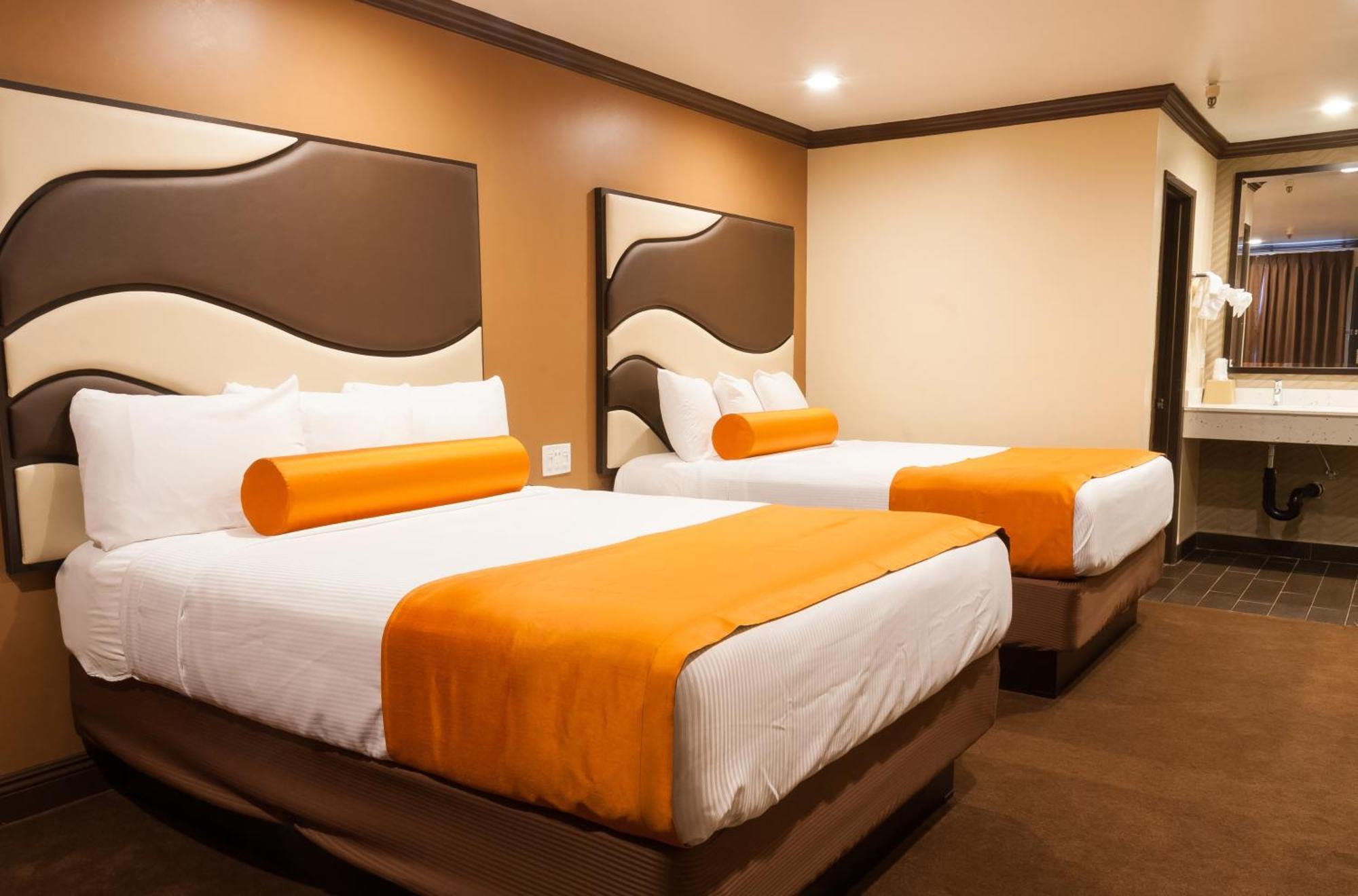
Centrally located hotels in the Joshua Tree area are typically positioned along Highway 62 or in Downtown Palm Springs, placing guests within a short drive of the park's main entrances, local dining, and desert attractions without requiring long detours. These properties tend to be budget-to-mid-range motels and inn-style hotels, with nightly rates averaging around $120, significantly lower than resort-style lodging further west. Room sizes are functional rather than generous - expect standard queen or double configurations with basic desert-ready amenities like microwaves, mini-fridges, and coffee makers.
The key trade-off with centrally located options here is atmosphere versus convenience. Highway-adjacent hotels offer the fastest park access but little pedestrian life, while Palm Springs properties add dining and nightlife at the cost of a longer drive to the park. For most park-focused visitors spending full days hiking or climbing, a no-frills base close to the west or north entrance makes more practical sense than a boutique stay further afield.
Pros:
- Short drive times to Joshua Tree's main entrances, with Yucca Valley hotels reaching the west entrance in around 10 minutes
- Free parking at virtually all gateway-area hotels - essential since all park exploration requires a vehicle
- Many include complimentary breakfast, reducing daily expenses during multi-day park visits
Cons:
- Most centrally located options lack the design or luxury amenities found at Palm Springs resort hotels
- Highway noise can be a factor at motels positioned directly off major roads like Indio Boulevard or Highway 62
- Limited on-site dining - most properties rely on nearby fast food or chain restaurants, not in-house restaurants
Practical Booking & Area Strategy for Joshua Tree
The three main base towns - Yucca Valley, Twentynine Palms, and Palm Springs - each serve a different traveler profile. Yucca Valley is the closest major town to the park's west entrance and offers the widest selection of budget-friendly motels along Highway 62; it's the most practical choice for hikers and climbers focusing exclusively on the park. Twentynine Palms sits at the north entrance and is quieter, with fewer dining options but quicker access to popular trails like Skull Rock and the Cholla Cactus Garden. Palm Springs, roughly 60 km southwest, adds urban convenience - restaurants, the Aerial Tramway, and a walkable downtown - but adds meaningful drive time to the park each day.
For attractions, the most visited sites include Hidden Valley, Barker Dam, Keys View (with panoramic views into the Coachella Valley), and the Cholla Cactus Garden. Stargazing is best from October through February, when park visitors are fewer and skies are darkest. Book at least 6 weeks ahead for spring or fall travel, and consider midweek stays to access slightly lower rates at highway motels.
Best Value Stays
These properties offer the strongest combination of location, included amenities, and price for travelers focused on maximizing time inside Joshua Tree National Park.
-
1. Super 8 By Wyndham Yucca Val/Joshua Tree Nat Pk Area
Show on map


 Check-infrom 15:00 until 23:59Check-outuntil 11:00
Just a few rooms left at the best rate!
fromUS$ 61
-
2. Americas Best Value Inn And Suites -Yucca Valley
Show on map


 Check-infrom 15:00 until 23:59Check-outuntil 11:00
Just a few rooms left at the best rate!
fromUS$ 76
-
3. Rodeway Inn And Suites Near Coachella
Show on map


 Check-infrom 15:00 until 23:59Check-outuntil 11:00
Hurry – almost gone at this price!
fromUS$ 55
-
4. 9 Palms Inn
Show on map


 Check-infrom 15:00 until 21:00Check-outfrom 10:00 until 11:00
Hurry – almost gone at this price!
fromUS$ 104
Best Premium Stay
For travelers who want desert proximity combined with a more polished base and urban access, Palm Springs offers a distinct step up in comfort and amenities.
-
5. Talavera Palm Springs Hotel - 21 & Over
Show on map


 Check-infrom 16:00 until 23:30Check-outuntil 11:00
Rooms filling fast – secure the best rate!
fromUS$ 366
Smart Travel & Timing Advice for Joshua Tree
The optimal window for visiting Joshua Tree National Park is mid-October through mid-November, when daytime temperatures sit around 22°C, crowds are lighter than spring, and the golden desert light makes for exceptional hiking conditions. Spring (March through May) is the most popular season - wildflowers can bloom across the park floor in wet years, but hotel rates in Yucca Valley and Twentynine Palms spike by around 40% compared to summer or winter pricing.
Summer visits require an early start - most experienced desert hikers are back at their hotels by 10 AM to avoid dangerous midday heat. Winter nights near the park can drop below freezing, so pack accordingly even if daytime temperatures are comfortable. A minimum of 2 nights in a gateway town hotel is necessary to experience more than one area of the park - the distance between the west entrance at Yucca Valley and the north entrance at Twentynine Palms alone is around 50 km of park road. For spring travel, book at least 6 weeks in advance; for fall, 3 weeks is usually sufficient for Yucca Valley properties, though Palm Springs hotels fill faster.